
call us
+86-18561032768mail us
[email protected]
call us
+86-18561032768mail us
[email protected]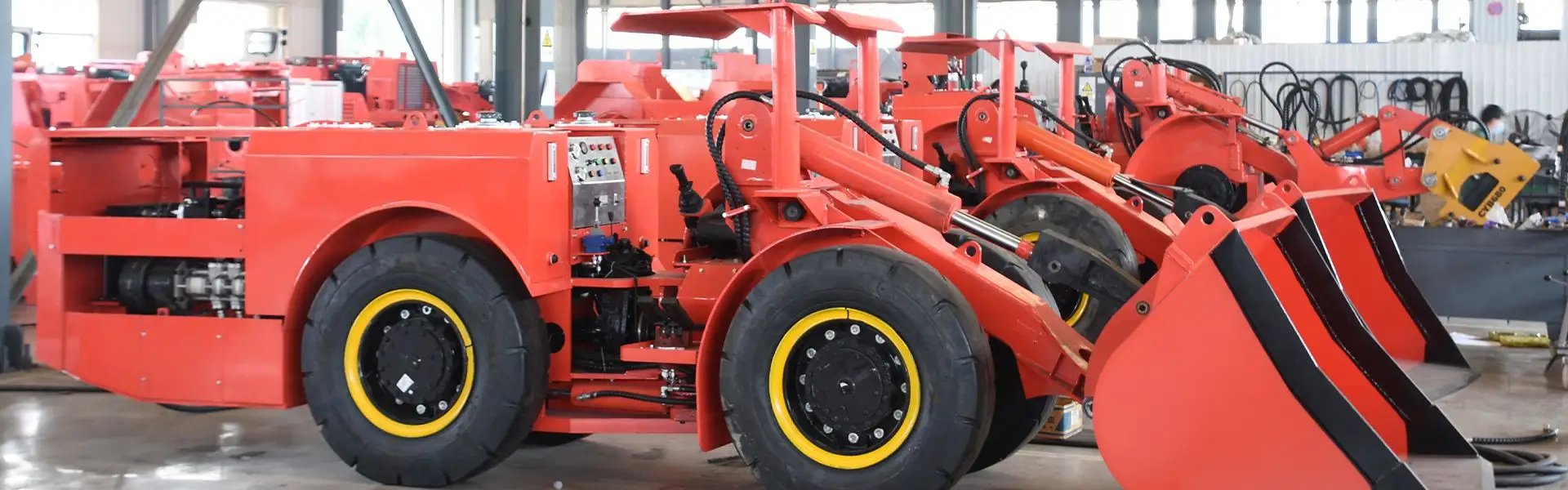
Mines operating below 1,000 meters depth — increasingly common in South African gold fields, Canadian nickel belts, and Australian copper-gold operations — face a convergence of thermal, geomechanical, and logistical challenges that transform equipment selection from an engineering decision into a risk-management exercise. Rock temperatures at 2,000 meters routinely exceed 45–50°C, with humidity above 90% in poorly ventilated headings. This combination attacks equipment on multiple fronts: electronics corrode, lubricants degrade at accelerated rates, and operators working in these conditions face heat-stress limits that restrict shift duration and productivity.
Long downhill hauls on ramp systems — often 3–5 kilometers from the deepest working levels to the surface or primary crusher — present a braking energy management problem that dwarfs what surface mining trucks encounter. The continuous conversion of gravitational potential energy into heat during loaded descent, sustained for 20–30 minutes per cycle, pushes conventional braking systems beyond their safe thermal envelope. Brake fires and runaway incidents in deep mines are well-documented across the industry and remain a leading cause of fatal accidents underground.
Perhaps the most fundamental challenge of deep mining is personnel safety. Every miner sent underground — particularly to deep, hot, and seismically active working areas — represents a risk that mine operators increasingly seek to eliminate through automation and remote operation. Regulatory trends in major mining jurisdictions are moving toward mandated maximum exposure hours and, in some cases, outright bans on personnel in certain high-risk zones.
Tuoxing's deep-mining equipment strategy is built around three pillars: remote operation to remove personnel from hazardous zones, electric powertrains to eliminate diesel heat and emissions that compound ventilation challenges, and heavy-duty drivetrain components engineered for sustained high-temperature operation.
The TC-200E and TC-306E electric scooptrams form the loading backbone of our deep-mining solution. Powered by high-capacity lithium-iron-phosphate (LFP) battery packs with active thermal management, these machines deliver full-shift endurance in deep, hot conditions without the heat load of a diesel engine — reducing the incremental ventilation requirement by an estimated 25–30% compared to diesel equivalents at the same depth. Battery swap or fast-charge configurations are available depending on mine infrastructure, with typical swap times under 15 minutes.
The 5G remote-control system — operational on both loaders and trucks — allows a single surface-based operator to control equipment working 1,000+ meters below. Low-latency 5G networks (typically sub-20ms round-trip) provide real-time video feeds from multiple onboard cameras and LiDAR sensors, enabling precision loading and tramming with latency that is imperceptible to the operator. In the event of communication loss, onboard collision-avoidance systems bring the machine to a controlled stop autonomously.
For haulage, the TU-12 through TU-20 trucks are equipped with DANA high-torque drive axles rated for sustained 30% grade operation and enclosed wet SAHR brakes backed by hydraulic retarders. The sealed brake system eliminates the maintenance burden of dry-disc inspection and replacement in hot, humid conditions, while the retarder absorbs descent energy without wear — converting the truck's kinetic energy into heat that is dissipated through the hydraulic oil cooler rather than through friction material.
| Stage | Recommended Model | Key Parameters | Special Configuration |
| Loading | TC-200E / TC-306E | 2.0 / 3.0 m³ — Battery-electric, long endurance | 5G remote control, onboard LiDAR, autonomous collision avoidance Enclosed wet brakes, hydraulic retarder, 5G remote-ready |
| Hauling | TU-12 ~ TU-20 | 12 ~ 20 t — DANA high-torque axles |
Quickly locate recommended models by tunnel cross-section, ore type, and daily production target. For custom configurations, contact our application engineering team.
| Scenario | Ore Types | Tunnel Section | Daily Capacity | LHD Model | Truck Model | Special Config |
| Narrow Vein | Gold, Silver, Copper narrow vein | ≤ 3×3 m | 50–300 t/d | TC-0.6E / TC-10E | TU-6 | Ultra-narrow body, electric zero emission |
| Mid-Section | Gold, Copper, Lead-Zinc | 3×3 ~ 4.5×4.5 m | 300–1,500 t/d | TC-150 / TC-200 | TU-8 / TU-10 | Cummins + DANA transmission |
| High-Tonnage | Copper, Iron | ≥ 4.5×4.5 m | 1,500–10,000+ t/d | TC-306E / TC-610E | TU-12 ~ TU-40 | 5G remote, fleet coordination, NAS 7-8 hydraulics |
| High Altitude | Polymetallic, Gold, Copper | Site-dependent | Site-dependent | TC-100E / TC-150E | TU-8 / TU-10 | High-altitude engine / electric, cold-weather package |
| Deep Mining | Gold, Copper, Iron | Site-dependent | Site-dependent | TC-200E / TC-306E | TU-12 ~ TU-20 | 5G remote, enclosed wet brakes, electric endurance |
Every underground mine has unique geology, tunnel geometry, and production targets. Our application engineering team provides free, no-obligation equipment selection analysis:
1. Share your tunnel cross-section, ore type, and daily capacity target
2. Receive a customized fleet recommendation with cycle-time simulation within 48 hours
3. Optional: online factory tour and reference-customer conversation before any commitment
Contact us: www.tuoxing.com | 48-Hour On-Site Service, Globally
 EN
EN
 AR
AR
 CS
CS
 DA
DA
 NL
NL
 FI
FI
 FR
FR
 DE
DE
 EL
EL
 IT
IT
 JA
JA
 PL
PL
 PT
PT
 RU
RU
 ES
ES
 SV
SV
 TL
TL
 ID
ID
 LT
LT
 UK
UK
 TR
TR
 FA
FA
 AF
AF
 MS
MS
 GA
GA
 BE
BE
 HY
HY
 KA
KA
 EO
EO
 LA
LA
 SO
SO
 ZU
ZU
 KK
KK
 TG
TG
 UZ
UZ
 KY
KY
 XH
XH